
The “X” is a planning variable.
All-on-X is the umbrella name for full-arch implant rehabilitation with more than four implants. In practice, that almost always means five, six, or, for specific cases, eight. The configuration is determined at planning, not at the surgical chair. The variables that shape it are biomechanical: how much load the prosthesis will see, how that load will be distributed across the implants, and how much margin the design should carry against the worst-case load.
The surgical day, the in-house lab workflow, and the integration timeline are essentially the same as All-on-4. What changes is the implant count and the resulting biomechanics. The decision isn’t cosmetic. It’s an engineering one.
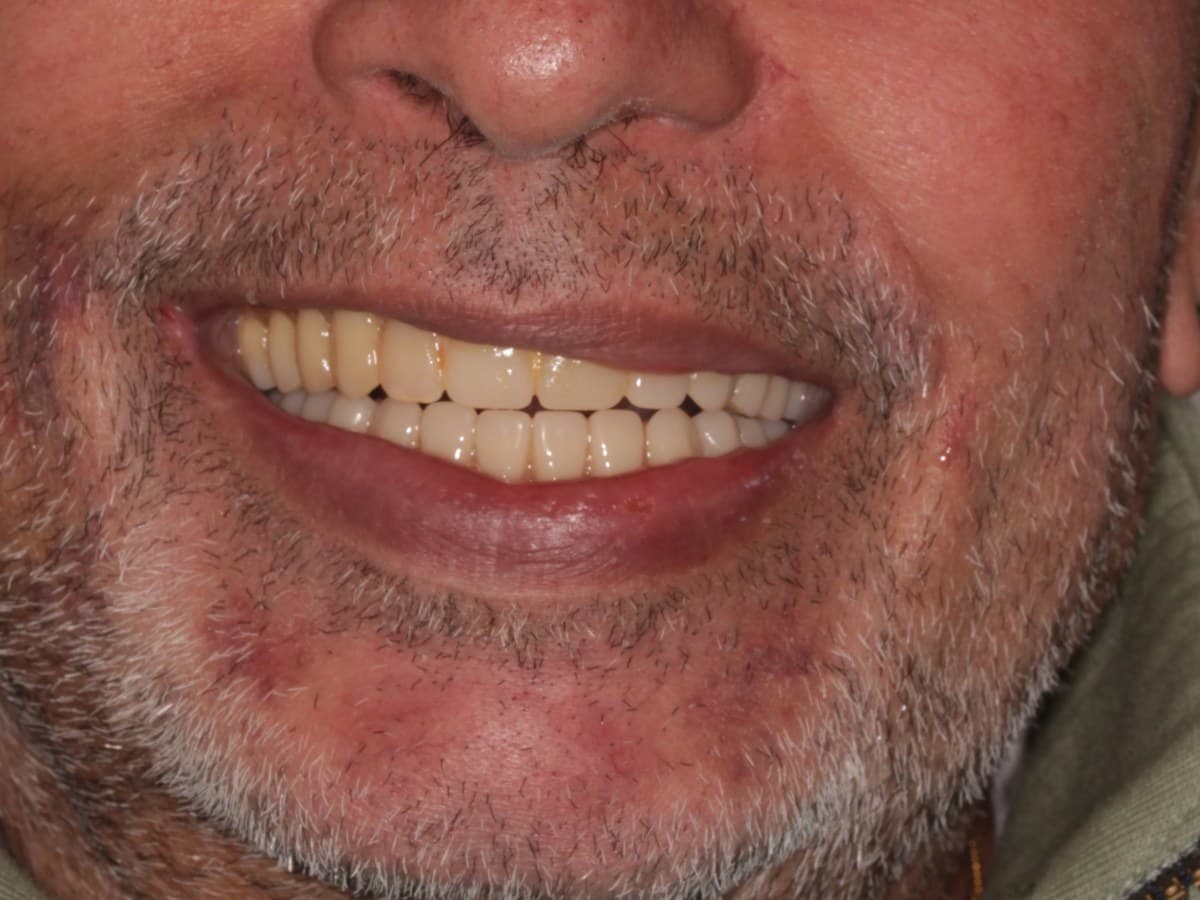
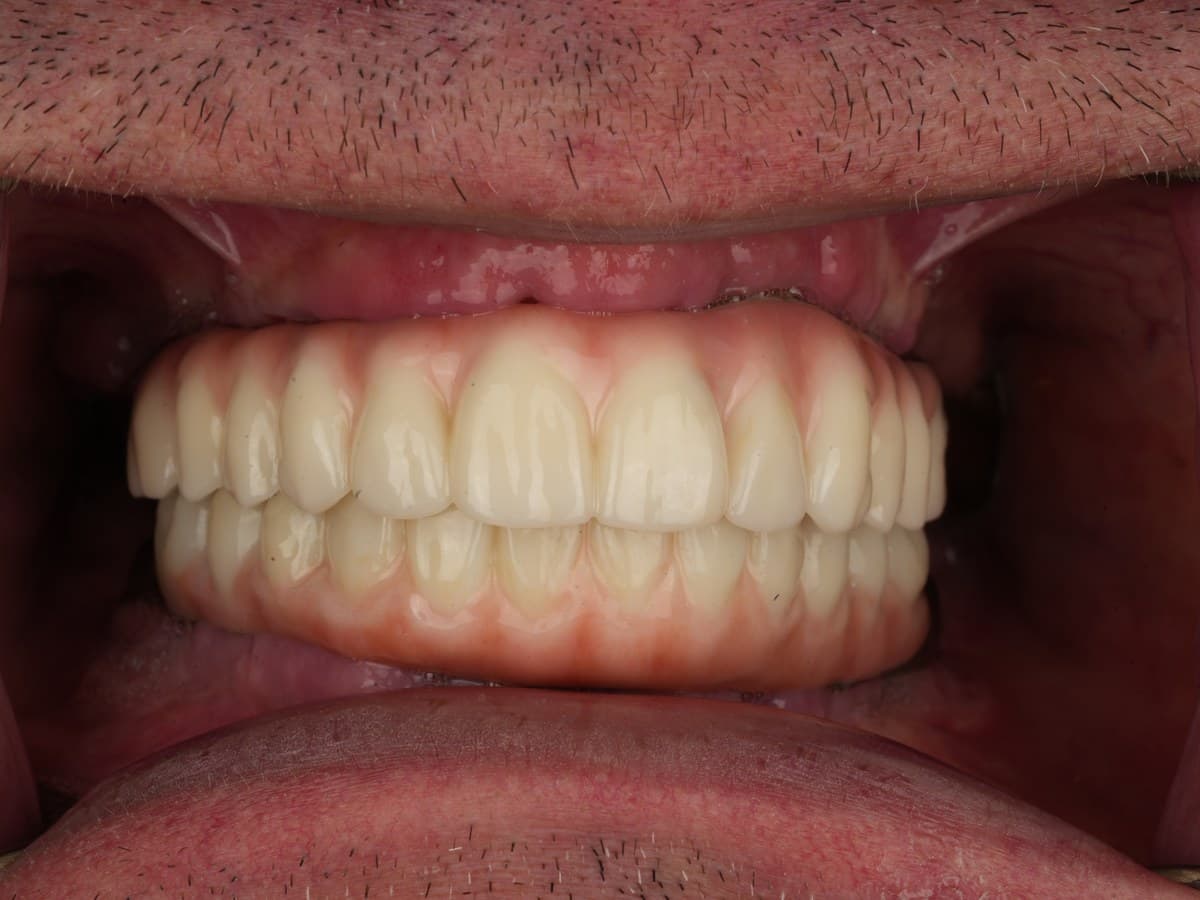
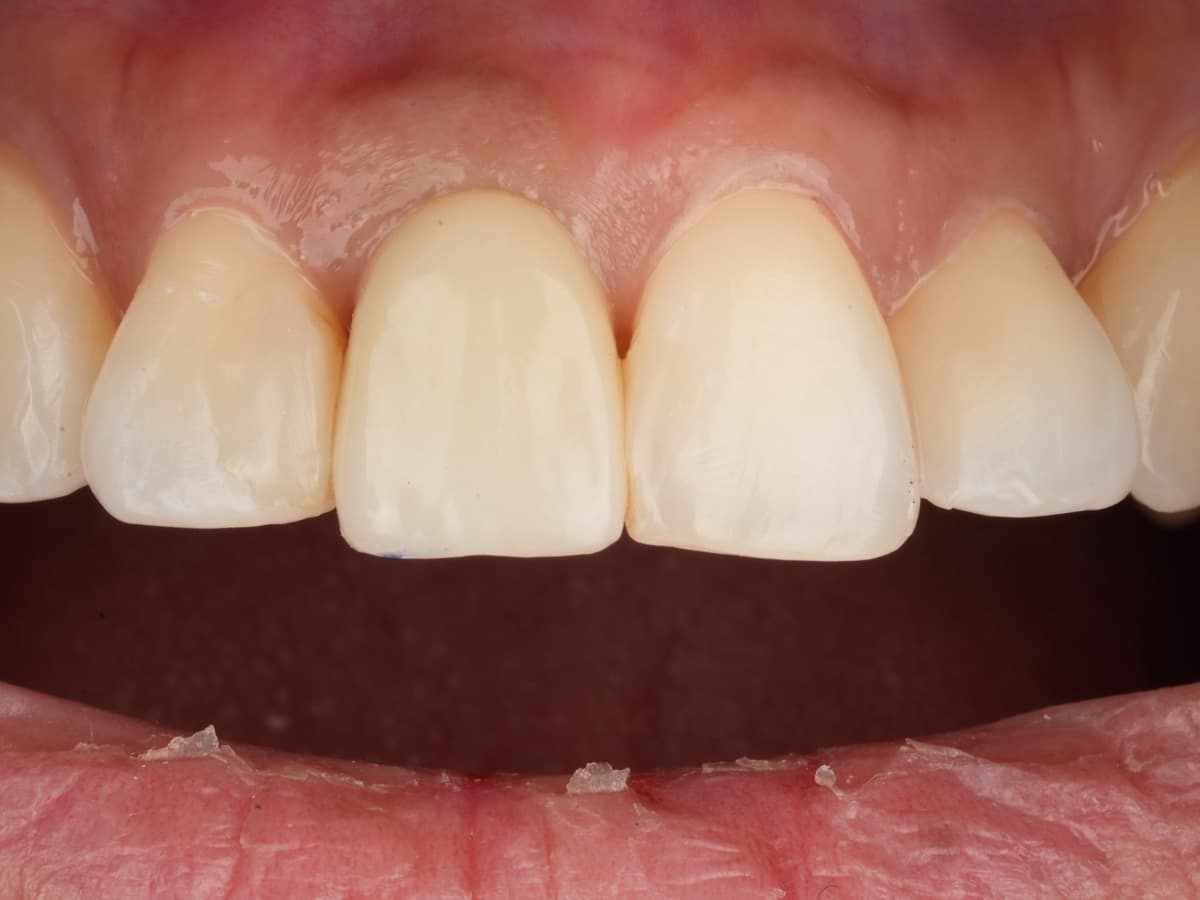
A decision framework, not a sales script.
The honest question at every full-arch consultation isn’t “can we do All-on-4?” It’s “is four enough?” Four well-placed implants will carry a full-arch prosthesis under normal load for most patients. Where the biomechanics flag risk, the answer is to add anchorage. The framework we use:
- Bone density. Cortical (D1) versus cancellous (D3–D4) bone behaves differently under load. Softer bone provides less resistance to micromotion and benefits from additional implants to spread the load.
- Bite force. A patient with high bite force, including heavy chewers, muscular jaw, and history of cracking teeth, loads four implants differently than a patient with normal bite force. We add anchorage where the bite analysis warrants it.
- Opposing dentition. A natural-dentition upper arch loads the lower prosthesis more than a full-arch prosthesis opposing it would. A denture opposing the new arch loads it less. Each configuration changes the implant-count calculus.
- Parafunctional habits. Clenching, grinding, bruxism. These produce lateral and sustained forces that fatigue the prosthesis-implant interface. Where parafunction is significant, we add implants and consider material choices that tolerate the load.
Two of the four factors can usually be answered from the CBCT and the bite analysis at the planning appointment. The other two come from your history and a focused exam. When the framework is positive across the board, four is enough. When even one of the four flags risk, the design tilts toward five, six, or more.
The engineering that sits under the prosthesis.
A full-arch prosthesis is a beam supported by point loads. Each implant is a support column. Add columns and the beam can carry more, but the placement matters as much as the count. Five poorly placed implants don’t outperform four well-placed ones.
The planning conversation around All-on-X is really about three placement decisions: where to put the implants along the arch (anterior–posterior spread), how to angulate them (parallel placement isn’t always optimal; strategic angulation often outperforms it), and whether to use longer or wider implants where bone allows. Digital planning lets us simulate the load distribution before any drill touches bone.
Where the case is borderline, with meaningful posterior resorption that grafting could address but might extend the timeline by a year, the conversation also includes whether zygomatic implants are the cleaner path forward.
Digital planning first. Surgery follows the plan.
Every full-arch case at Revive is digitally planned before surgical day: implant positions, angulation, depth, prosthetic emergence, and the surgical guide where appropriate. We’ve placed thousands of implants over the last 15 years, and the one consistent pattern is that the cases that go well are the cases that were planned well before the patient walked into the operatory.
The plan is reviewed with you at a separate planning appointment, before surgery. You see the imaging, the implant positions, the proposed prosthetic design, and the estimated bone work. You sign off on it. The surgical day then executes the plan, which is why our same-day provisional workflow is reliable. The lab doesn’t improvise during the case; it executes a design that was finalized days earlier.
See our technology and digital workflow for the planning tools.
Same surgical day. Same integration window.
Consultation and planning: two visits, typically within two weeks of first contact.
Surgical day: 3–5 hours of surgical time depending on implant count, plus sedation recovery and provisional seating. Most patients home by mid-afternoon.
Provisional phase: 3–6 months. Soft diet for the first 6–8 weeks, gradually expanded.
Final prosthesis: designed, milled in-house, and seated once integration is confirmed.
Long-term: annual implant maintenance at minimum, with hygiene visits two to four times per year depending on case complexity. See implant aftercare for the maintenance picture.
The quote covers all of it.
All implants placed, IV sedation or general anesthesia from our in-house team, the same-day provisional prosthesis, the final restoration, all in-house lab work, and post-operative follow-up through integration. The full range and financing detail are on the cost & financing page. Pre-qualify in about a minute without affecting your credit.
If your case sits at the All-on-4 / All-on-X boundary, the right answer is to put the imaging in front of us and have the conversation. Book a consultation.